Hospitals serve patients with a wide range of nutritional requirements, medical conditions and swallowing abilities. For some patients, safely consuming ordinary foods and beverages can be difficult. This is where food thickeners for hospitals can play an important role in a carefully managed nutrition program.
Food and beverage thickeners allow hospital foodservice teams to modify the consistency of liquids, soups, sauces and other foods according to a patient’s prescribed diet. They are commonly used as part of texture-modified diets for people experiencing dysphagia or difficulty swallowing.
In a hospital environment, however, simply making a beverage “thicker” is not enough. Consistency, accurate preparation, standardized procedures and coordination between clinical and foodservice teams are all important. The goal is to provide meals and beverages that meet the patient’s prescribed requirements while also supporting nutrition, hydration, food quality and an enjoyable eating experience.
What Is a Food and Drink Thickener?
A food and drink thickener is an ingredient used to increase the viscosity of a liquid.
Thickeners can be added to beverages and foods such as:
- Water
- Juice
- Milk
- Coffee and tea
- Nutritional beverages
- Soups and broths
- Sauces
- Gravies
- Smoothies
- Desserts
- Dressings and dips
In healthcare settings, food thickeners are frequently associated with dysphagia management. Dysphagia is a swallowing disorder that can affect a person’s ability to safely and efficiently move food or liquid from the mouth through the throat and digestive tract.
Dysphagia can occur for many reasons and may be associated with neurological conditions, stroke, structural changes, illness, injury or other health conditions. Because every patient’s swallowing abilities are different, decisions about texture-modified foods and beverages should be based on an individualized clinical assessment.
Speech-language pathologists and other members of the healthcare team may recommend modifications to food texture or liquid viscosity as part of a patient’s overall care plan. Thickened liquids are not appropriate for every person with dysphagia, and their use does not completely eliminate the possibility of aspiration. Hydration, nutrition, medications, patient preferences and quality of life also need to be considered.
Learn More About the Donmar Foods Food and Drink Thickener below.
Why Are Food Thickeners Used in Hospitals?
One of the challenges facing hospital kitchens is that every patient does not necessarily receive the same type of meal.
A single meal service may need to accommodate regular diets, therapeutic diets, allergies, cultural requirements, texture-modified foods and beverages of different consistencies. Foodservice teams therefore need ingredients and procedures that help them produce repeatable results efficiently.
For patients who have been prescribed thickened beverages or texture-modified foods, a food thickener can help the kitchen prepare the required consistency.
The clinical objective depends on the individual patient. In some cases, changing liquid viscosity may make a liquid easier for that particular patient to control during swallowing. However, the appropriate consistency must be determined by the patient’s healthcare team rather than by foodservice staff independently.
From an operational perspective, a dependable food thickener can help hospital kitchens achieve several important goals.
Consistent Preparation
Consistency is especially important in healthcare foodservice.
Preparing one glass of thickened juice at home is very different from preparing dozens or hundreds of portions in a large institutional kitchen. Staff members working across different shifts should be able to follow the same procedures and achieve comparable results.
Clear recipes, accurate measuring and standardized mixing procedures help reduce variation from one batch to another.
Efficient High-Volume Production
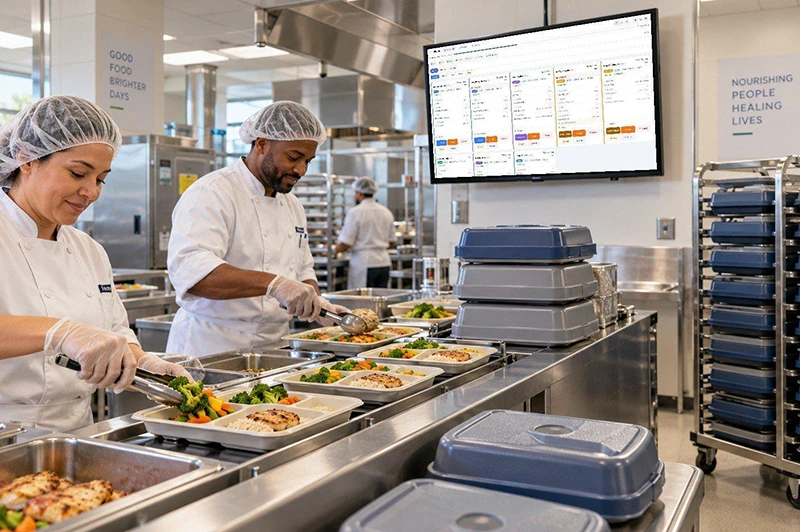
Hospital kitchens often operate on tight meal-service schedules. Foodservice teams need to prepare large numbers of individualized trays within relatively short periods.
A thickener that is simple to measure and incorporate into different foods and beverages can help make preparation more efficient while supporting standardized results.
Flexibility Across Different Menu Items
Patients still need variety.
Depending on the prescribed diet and suitability of the individual food or beverage, hospital kitchens may need to modify everything from breakfast beverages to soups, sauces and nutritional drinks.
A versatile commercial food thickener provides kitchen staff with an ingredient that can be used across multiple applications instead of requiring an entirely separate preparation system for every menu item.
Understanding IDDSI Levels for Thickened Drinks
Healthcare organizations increasingly use the International Dysphagia Diet Standardisation Initiative (IDDSI) to create consistent terminology for texture-modified foods and drinks.
The IDDSI Framework contains eight levels ranging from 0 to 7. Drinks are classified from Level 0 through Level 4, while foods are classified across Levels 3 through 7.
For beverages, the IDDSI terminology is:
- Level 0 – Thin
- Level 1 – Slightly Thick
- Level 2 – Mildly Thick
- Level 3 – Moderately Thick
- Level 4 – Extremely Thick
This standardized language helps healthcare professionals, foodservice staff, patients and caregivers communicate more clearly about the intended consistency of foods and beverages.
You may also encounter older descriptions such as “nectar-like,” “honey-like” and “pudding-like.” While these terms are still familiar within foodservice, the numbered IDDSI terminology provides a more standardized framework.
IDDSI also provides testing methods that can be used to evaluate the flow and texture characteristics of foods and beverages. Importantly, IDDSI recommends testing products under their intended serving conditions because variables such as temperature can affect consistency.
How Hospital Kitchens Prepare Thickened Beverages
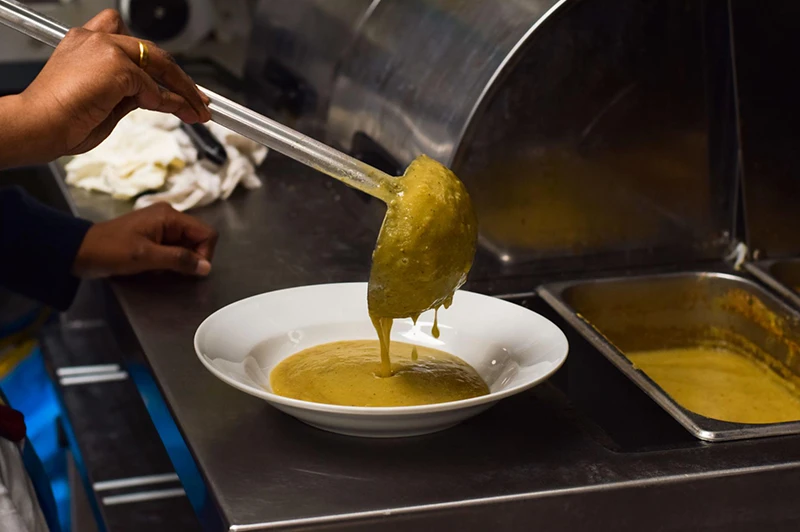
A hospital’s exact preparation process will depend on its foodservice procedures, the thickener being used and the patient’s prescribed diet.
A typical workflow may involve several steps.
1. Review the Diet Order
Before preparation begins, foodservice staff need clear information about the consistency that has been prescribed for the patient. Hospital foodservice systems may use diet codes, tray tickets, electronic dietary management systems or other procedures to communicate these requirements to the kitchen.
2. Measure the Beverage
Accurate preparation starts with using a known volume of liquid. The amount of thickener required depends on both the volume of the beverage and the desired final consistency.
3. Measure the Thickener Accurately
Commercial kitchens should follow the manufacturer’s preparation instructions and the healthcare facility’s approved procedures. Guessing quantities by appearance can result in inconsistent products. Measuring the thickener helps make preparation more repeatable across different employees and shifts.
4. Mix Thoroughly
Proper dispersion is important for producing an even texture and minimizing lumps or areas of inconsistent viscosity. Mixing procedures may differ depending on whether staff are preparing an individual serving or a larger batch.
5. Allow the Product to Reach Its Final Consistency
Some thickening products continue to develop viscosity after they are initially mixed. Foodservice staff should understand how the product behaves over time and follow the manufacturer’s recommended preparation procedures before serving.
6. Verify the Required Consistency
Where required by the healthcare facility’s procedures, the prepared beverage should be checked to confirm that it meets the intended consistency. IDDSI provides standardized testing methods that healthcare organizations can incorporate into their quality-control processes.
Temperature Matters When Preparing Thickened Foods and Beverages
Hospital kitchens routinely serve foods and drinks at very different temperatures.
Coffee may be served hot. Juice and milk are refrigerated. Soup may travel from a production kitchen through a tray line before reaching the patient’s room.
These differences matter because the flow characteristics of some foods and beverages can change according to temperature, preparation method, holding time and ingredients.
For this reason, IDDSI advises that testing be performed under the conditions in which the product is intended to be served.
Hospital foodservice departments can help improve consistency by developing standardized recipes and testing procedures for frequently served beverages rather than assuming that the same preparation method will perform identically in every application.
Supporting Patient Nutrition While Modifying Texture
Texture modification should not cause hospital kitchens to lose sight of the broader purpose of foodservice: providing patients with adequate nutrition and hydration while making meals as appealing and enjoyable as possible.
Patients recovering from illness or surgery may already have reduced appetite. If texture-modified meals or beverages are unappealing, unfamiliar or difficult to consume, intake may suffer.
This makes food quality particularly important.
Hospital foodservice teams should consider factors such as:
- Flavour
- Appearance
- Aroma
- Serving temperature
- Menu variety
- Portion size
- Nutritional density
- Hydration
- Patient preferences
Clinical teams also need to monitor the broader effects of texture modifications. Professional guidance recognizes that thickened liquids may reduce fluid intake for some patients, making hydration an important consideration when developing an individualized care plan.
The most effective approach therefore brings together clinical recommendations with thoughtful food preparation.
Food Thickeners Are Part of a Larger Dysphagia Care Plan
Food thickeners should not be viewed as a stand-alone treatment for swallowing difficulties.
Management of dysphagia may involve assessment by a speech-language pathologist and collaboration between physicians, dietitians, nurses, pharmacists, foodservice professionals and other members of the healthcare team.
Depending on the patient, a care plan may incorporate texture modification alongside positioning, swallowing strategies, rehabilitation, adaptive equipment, oral care and other interventions.
Food and beverage consistency may also need to be reassessed as a patient’s medical condition or swallowing ability changes.
For hospital foodservice departments, the role is to reliably translate the prescribed diet into the meals and beverages delivered to the patient’s bedside.
Why Standardization Matters in Institutional Kitchens
Hospitals are complex foodservice environments.
A patient may receive several meals, snacks and beverages each day, prepared by different employees across multiple shifts. Without standardized procedures, variations can occur.
Healthcare facilities can improve consistency by establishing procedures for:
- Measuring liquid volumes
- Measuring thickening agents
- Mixing times
- Resting or standing times
- Serving temperatures
- Batch preparation
- IDDSI testing where applicable
- Labelling and tray identification
- Holding times
- Staff training
- Documentation
Standardized recipes can be particularly useful for frequently served items such as water, juice, milk, coffee, tea, soup and nutritional beverages.
The objective is to make the required consistency reproducible rather than dependent on an individual employee’s visual judgment.
Choosing a Food Thickener for a Hospital Kitchen
Healthcare foodservice buyers need to consider both patient requirements and operational demands when sourcing ingredients.
Some important questions include:
Can it be used with both hot and cold foods and beverages?
A hospital kitchen prepares a diverse range of menu items, so versatility can simplify purchasing and inventory.
Does it produce predictable results?
Repeatability is important when multiple employees are preparing the same item.
Is it easy to measure and mix?
Simple procedures can be especially valuable in busy kitchens with multiple shifts.
Can it be purchased in foodservice quantities?
Healthcare facilities require packaging formats that are appropriate for their volume of use.
Are product specifications readily available?
Procurement departments, dietitians and foodservice managers may require ingredient information, preparation instructions and specification documents before approving a product.
Does the supplier understand institutional foodservice?
Hospitals have different needs from consumer kitchens. Working with an experienced commercial food ingredient supplier can help simplify purchasing and product support.
Consist Rite Food and Drink Thickener from Donmar Foods
Donmar Foods offers the Consist Rite Food and Drink Thickener for commercial and institutional kitchens. As an instant thickener, it can also be used at the bedside.
Consist Rite is a modified corn starch-based thickener that can be used with both hot and cold liquids. It can be incorporated into beverages, soups, gravies, stews, sauces, desserts, dressings and other preparations.
The product is gluten-free, vegan, Kosher and free of declarable allergens. It is available in commercial foodservice formats and is designed to help kitchens achieve smooth, consistent results.
Donmar Foods also provides a mixing chart for preparing different consistencies, along with a downloadable product specification sheet for foodservice and purchasing teams.
Healthcare facilities should always use thickening products according to their own clinical protocols, approved recipes and the consistency prescribed for the individual patient.
Foodservice Ingredients for Hospitals and Institutional Kitchens
Food thickeners are just one part of a hospital kitchen’s ingredient requirements.
Institutional foodservice departments need products that allow them to prepare large numbers of meals efficiently while maintaining reliable flavour, nutrition and consistency.
In addition to Consist Rite Food and Drink Thickener, Donmar Foods manufactures and supplies foodservice products including soup bases, spices, seasoning blends, powdered drink mixes, dessert mixes and other ingredients used by commercial and institutional kitchens.
Working with dependable suppliers can help healthcare foodservice departments streamline inventory, standardize recipes and maintain consistent preparation across high-volume operations.