Choosing between powdered beverage mixes and ready-to-drink beverages can have a significant impact on the cost, storage requirements, labour, consistency and efficiency of a foodservice operation.
For restaurants, cafeterias, catering companies, hospitals, long-term care facilities, schools and other high-volume kitchens, powdered beverage mixes are often the more practical choice because they can be stored efficiently, prepared in large batches and mixed as needed. Ready-to-drink beverages, on the other hand, offer maximum convenience and can be an excellent option for grab-and-go service or operations where beverage preparation needs to be kept to an absolute minimum.
So, when comparing powdered beverage mixes vs. ready-to-drink beverages, which one is better for your operation?
The answer depends on how many beverages you serve, how much storage space you have, your labour requirements, your service format and the level of flexibility you need.
This guide examines the advantages and disadvantages of both options to help restaurants, commercial kitchens and institutional foodservice operators make a more informed purchasing decision.
What Are Powdered Beverage Mixes?
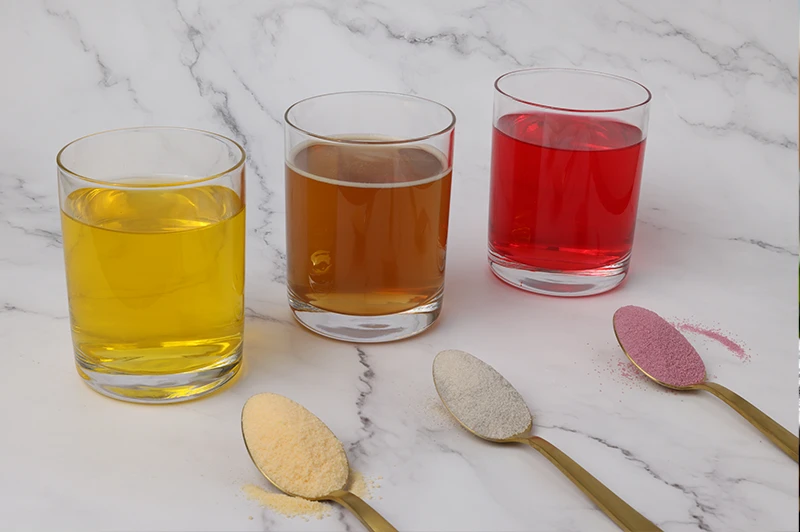
Powdered beverage mixes are dry formulations designed to be combined with water before serving. Depending on the product, they can be prepared by the glass, pitcher, dispenser or in larger batches for high-volume foodservice.
Commercial powdered drink mixes are available in a wide variety of flavours and formats, including:
- Fruit-flavoured drink mixes
- Lemonade mixes
- Fruit punch
- Iced tea mixes
- Hot apple cider mixes
- Fortified or enriched beverage mixes
- Single-serving drink mixes
- Bulk beverage mixes
For foodservice operations, one of the primary advantages of a powdered beverage mix is that the operation stores the concentrated dry product rather than large quantities of finished beverages containing mostly water. Being able to store the product at room temperature versus refrigeration is another key advantage of using a powdered mix.
Water is added at the kitchen or serving location when the beverage is needed.
This simple difference can create important advantages in storage, transportation and cost per serving.
What Are Ready-to-Drink Beverages?
Ready-to-drink beverages, commonly abbreviated as RTD beverages, arrive from the manufacturer already prepared for consumption.
Examples can include bottled iced tea, juice drinks, fruit beverages, flavoured water and other pre-mixed beverages packaged in bottles, cans, cartons or larger containers.
Their greatest advantage is convenience.
There is generally no measuring or mixing required. Staff can simply refrigerate the product when necessary and serve it in its original packaging or pour it into a glass.
That convenience can make ready-to-drink beverages especially attractive for convenience stores, vending operations, grab-and-go counters, hotel minibars and other situations where individual packaged beverages are preferred.
However, the needs of a high-volume commercial kitchen can be very different.
Powdered Beverage Mixes vs. Ready-to-Drink at a Glance
| Factor | Powdered Beverage Mixes | Ready-to-Drink Beverages |
|---|---|---|
| Storage efficiency | Excellent | Requires more space |
| Shipping efficiency | Excellent | Finished beverages are much heavier |
| Preparation | Requires water and mixing | Little or no preparation |
| High-volume service | Excellent | Can become cumbersome at scale |
| Grab-and-go service | Ideal for fountain beverages | Excellent |
| Cost per serving | Often economical at higher volumes | Convenience may increase cost |
| Packaging per serving | Can be very low with bulk formats | Much higher |
| Beverage consistency | Excellent when correct ratios are followed | Excellent |
| Menu flexibility | High | Generally fixed |
| Inventory efficiency | Concentrated product requires less space | More physical inventory required |
Neither format is universally better. The right choice depends on the type of foodservice operation.
For many restaurants and institutional kitchens serving beverages by the glass, however, powdered mixes provide several important operational advantages.
1. Powdered Beverage Mixes Can Reduce Storage Requirements
Storage space is valuable in almost every commercial kitchen.
A restaurant, hospital kitchen, school cafeteria or catering company may need to store hundreds or thousands of servings of beverages alongside food ingredients, cleaning supplies, disposable products and other inventory.
Ready-to-drink beverages can consume a substantial amount of this space because the water is already included in the finished product.
Powdered beverage mixes are concentrated.
Instead of storing cases of prepared beverages, kitchens can store a comparatively compact supply of dry mix and add water when it is time to prepare the beverage.
For facilities with limited dry storage, refrigerated storage or warehouse capacity, that difference can be significant.
2. Powdered Drink Mixes Can Be More Efficient to Transport
There is another simple consideration when comparing powdered beverage mixes with ready-to-drink beverages: water is heavy.
With ready-to-drink products, the manufacturer or distributor transports the entire finished beverage to your facility.
With powdered mixes, most of that water can be supplied at the location where the beverage is prepared.
This can make powdered beverage mixes particularly practical for foodservice distributors and large organizations supplying multiple locations.
Restaurants, healthcare organizations, school systems and multi-location foodservice operators may all benefit from purchasing a concentrated product rather than repeatedly receiving large volumes of packaged beverages.
3. Powdered Beverage Mixes Can Help Control Cost Per Serving
Cost control is essential in foodservice.
Even a relatively small difference in beverage cost can become significant when multiplied across hundreds or thousands of servings.
Commercial powdered drink mixes can provide an economical way to prepare beverages in volume because the product is purchased in concentrated form and mixed on-site.
That does not mean powdered beverages will always cost less than every ready-to-drink alternative. Pricing varies considerably based on the product, supplier, packaging format, order volume and preparation requirements.
Foodservice operators should compare the actual cost per prepared serving rather than simply comparing the purchase price of a package or case.
For a meaningful comparison, calculate:
Product cost ÷ number of prepared servings = beverage cost per serving
Then consider additional costs such as shipping, storage, refrigeration, labour and packaging.
This provides a much more accurate picture of the total cost of each beverage program.
4. Bulk Beverage Mixes Are Well Suited to High-Volume Foodservice
Preparing beverages one bottle or container at a time may be perfectly practical when serving a small number of people.
The equation changes dramatically when serving hundreds of meals.
Institutional kitchens frequently need to prepare large volumes of beverages quickly and predictably. This can include:
- Hospitals
- Long-term care facilities
- Retirement residences
- School cafeterias
- Daycares
- Correctional facilities
- Corporate cafeterias
- Catering operations
- Dining halls
Bulk powdered beverage mixes allow staff to prepare larger batches according to standardized preparation instructions.
The same principle can benefit busy restaurants, buffet operations and catering companies that need a reliable supply of beverages during peak periods.
5. Powdered Beverage Mixes Provide Consistent Results
Consistency matters in foodservice.
Customers should receive the same beverage whether they order it Monday morning or Saturday evening. Institutional kitchens also need repeatable preparation procedures that can be followed by different members of the foodservice team.
Commercial powdered beverage mixes are formulated around established mixing ratios.
When staff follow the manufacturer’s preparation instructions, the same amount of powder and water can produce a consistent flavour profile from batch to batch.
Standardized preparation procedures can be especially valuable for:
- Restaurant chains
- Multi-location foodservice operators
- Healthcare kitchens
- School foodservice programs
- Catering companies
- Large institutional kitchens
Training is still important. Staff should use the recommended mixing ratio rather than estimating quantities.
The more closely preparation procedures are standardized, the more consistent the finished beverage is likely to be.
6. You Can Prepare Beverages According to Actual Demand
Demand can change dramatically throughout a foodservice operation’s day.
A restaurant may sell very little iced tea during one service period and considerably more during another. A caterer may serve 50 guests one day and 500 the next.
Powdered mixes give operators the ability to prepare beverages based on anticipated demand.
A kitchen can make another batch when needed instead of opening numerous individual containers in advance.
This flexibility can make inventory planning easier and can help reduce unnecessary prepared beverage waste.
The same principle works particularly well for seasonal beverages.
For example, cold fruit drinks and iced tea may experience higher demand during warmer months, while hot apple cider may be more popular during fall and winter.
7. Bulk Powdered Mixes Can Reduce Packaging per Serving
Packaging is another consideration for high-volume foodservice.
Individually packaged ready-to-drink beverages can generate a bottle, can or carton for every serving.
A bulk powdered beverage mix can produce many servings from a single package.
The exact environmental impact of any beverage depends on many factors—including packaging materials, manufacturing, transportation, recycling and waste management—so it is important to avoid assuming that one format is automatically more sustainable in every situation.
From a commercial kitchen perspective, however, bulk beverage formats can substantially reduce the number of individual beverage containers that staff need to receive, handle, store and dispose of.
That can simplify back-of-house operations as well as waste handling.
8. Powdered Beverage Mixes Can Simplify Inventory Management
High-volume kitchens often manage hundreds of food and beverage SKUs.
Physical inventory takes time to receive, organize, count and replenish.
Because powdered mixes are concentrated, a relatively compact inventory can represent a substantial number of prepared beverages.
This can be particularly advantageous for businesses purchasing products in bulk or ordering through foodservice distributors.
A smaller physical inventory footprint can make it easier to:
- Organize storage areas
- Monitor inventory
- Maintain par levels
- Receive deliveries
- Move products within the facility
- Supply multiple preparation stations
- Reduce the frequency of replenishment
These benefits become increasingly important as beverage volume grows.
When Are Ready-to-Drink Beverages the Better Choice?
Despite the advantages of powdered mixes, ready-to-drink beverages have an important place in foodservice.
Grab-and-Go Environments
If customers need to pick up a beverage and leave immediately, individually packaged RTD products are extremely convenient.
This may be preferable for:
- Convenience counters
- Grab-and-go cafés
- Takeout restaurants
- Vending machines
- Hotel markets
- Retail refrigerators
A sealed bottle or can is portable and requires virtually no preparation.
Operations With Very Low Beverage Volume
A kitchen that sells only a handful of beverages each day may not benefit as much from preparing beverages in batches.
In these situations, the simplicity of an RTD product may outweigh the potential efficiencies of a powdered beverage program.
Environments With Minimal Preparation Capacity
Powdered drink mixes require access to potable water, appropriate measuring procedures and suitable containers or dispensing equipment.
When those resources are unavailable, an RTD beverage may be easier to manage.
Individually Packaged Meal Programs
Some meal programs specifically require a factory-sealed individual beverage.
In those circumstances, an RTD product may be the most appropriate format.
Where potable water is available, single serving crystal pouches can be a good fit for weight and cost savings.
Which Beverage Format Is Better for Restaurants?
For a restaurant serving beverages primarily by the glass, powdered beverage mixes can be an excellent option, especially when the beverage is consumed on-site.
Restaurants can prepare iced tea, lemonade, fruit-flavoured beverages and other drinks in batches and dispense them throughout service.
This approach can be particularly attractive for:
- Family restaurants
- Quick-service restaurants
- Buffet restaurants
- Restaurant chains
- Food courts
- Banquet facilities
- Commercial catering
Ready-to-drink beverages may still complement the program for takeout, delivery or grab-and-go customers.
Many operators do not necessarily need to choose exclusively between the two formats. A restaurant can use bulk powdered mixes for dine-in beverages while maintaining selected bottled or canned beverages for takeout.
Which Beverage Format Is Better for Institutional Kitchens?
The advantages of powdered beverage mixes can become even more significant in institutional foodservice because of the number of meals being served.
Hospitals, long-term care centres, schools and correctional facilities may need to prepare beverages for hundreds or thousands of people.
That makes factors such as storage efficiency, cost per serving, standardized preparation and bulk purchasing particularly important.
Some institutional operations may also require specialized beverage options.
For example, enriched powdered drink mixes can provide an additional format for facilities looking for beverages formulated with specified nutrients. Product specifications and nutritional information should always be reviewed by the appropriate foodservice, nutrition or healthcare professional before selecting a product for a specific dietary program.
What Should You Look for in a Commercial Powdered Beverage Mix?
Not all powdered drink mixes are intended for high-volume foodservice.
When evaluating suppliers, consider the following factors.
Appropriate Foodservice Pack Sizes
Look for packaging formats suited to your operation.
A small café and a large hospital kitchen will have very different requirements. Commercial kitchens preparing beverages every day may benefit from bulk foodservice packaging, while specific institutional programs may require individually portioned powdered mixes.
Clear Preparation Instructions
Commercial products should provide a defined mixing ratio and straightforward preparation procedure.
Clear instructions make staff training easier and help improve consistency.
Flavour Selection
Offering several beverage flavours can help foodservice operators provide variety without maintaining a large inventory of finished drinks.
Product Specifications
Foodservice buyers may require specification sheets covering ingredients, preparation, packaging, storage and other product information.
This documentation can be particularly important for healthcare, education and institutional purchasing.
Reliable Supply
Consistency is not just about what happens inside the kitchen.
Restaurants and institutions also need dependable suppliers capable of supporting ongoing foodservice demand.
Ask potential suppliers about product availability, foodservice distribution and their ability to support the purchasing volumes required by your organization.
Donmar Foods Powdered Drink Mixes for Commercial and Institutional Kitchens
Donmar Foods manufactures powdered beverage mixes designed specifically for commercial and institutional foodservice.
Our powdered drink mix selection includes fruit-flavoured drink mixes, lemon iced tea, hot apple cider and enriched single-serving fruit-flavoured drink mixes.
Bulk fruit-flavoured options are available in flavours such as:
- Apple
- Cherry
- Fruit Punch
- Grape
- Lemonade
- Orange
- Peach
- Pineapple, Banana and Orange
Our beverage products are designed to provide professional kitchens with a convenient way to prepare consistent drinks for restaurants, cafeterias, catering operations and institutional foodservice programs.
Donmar Foods has been supplying foodservice operations since 1972 and manufactures its products in Aurora, Ontario, Canada.
Powdered Beverage Mixes vs. Ready-to-Drink: The Bottom Line
So, are powdered beverage mixes better than ready-to-drink beverages?
For high-volume restaurants, commercial kitchens and institutional foodservice operations, powdered beverage mixes frequently offer important advantages.
They can provide:
- More efficient storage
- Efficient transportation
- Competitive cost per serving
- Easy bulk preparation
- Consistent results
- Flexible batch sizes
- Less individual packaging
- Efficient inventory management
- Convenient purchasing for high-volume operations
Ready-to-drink beverages remain an excellent choice when individual packaging, portability and zero preparation are the primary priorities.
The best solution therefore depends on how your operation serves beverages.
For a busy kitchen preparing dozens, hundreds or thousands of beverages, it is worth comparing the total cost and operational requirements of both formats—not simply the price of the product itself.
Frequently Asked Questions About Powdered Beverage Mixes
Are powdered beverage mixes good for restaurants?
Yes. Powdered beverage mixes can be particularly well suited to restaurants that prepare drinks such as iced tea, lemonade and fruit-flavoured beverages in larger batches. They offer efficient storage and allow beverages to be prepared according to demand.
Are powdered drink mixes cheaper than ready-to-drink beverages?
Powdered drink mixes can provide a competitive cost per serving, particularly in high-volume foodservice, but costs vary by supplier, product and order volume. Restaurants should compare the cost per prepared serving as well as shipping, storage, refrigeration, labour and packaging requirements.
What are the advantages of powdered beverages in foodservice?
Key advantages can include compact storage, efficient transportation, bulk preparation, standardized mixing, flexible batch sizes and fewer individual beverage containers.
Are powdered beverage mixes suitable for institutional kitchens?
Yes. Bulk and portion-controlled powdered beverage mixes can be useful in hospitals, long-term care facilities, schools, cafeterias, correctional facilities and other institutional kitchens. Buyers should select products according to the nutritional, operational and dietary requirements of their facility.
Do powdered beverage mixes need refrigeration?
Unprepared dry beverage mixes are generally designed for dry storage according to the manufacturer’s storage instructions. Once prepared with water, the beverage should be stored and handled according to the manufacturer’s directions and the food-safety procedures of your facility.
How do commercial kitchens prepare powdered drink mixes consistently?
Use the exact amount of powder and water specified by the manufacturer, standardize measuring equipment, document the preparation procedure and train employees to follow the same process for every batch.
Can powdered beverage mixes be purchased in bulk?
Yes. Commercial powdered beverage mixes are commonly available in bulk foodservice formats designed for restaurants, cafeterias, catering companies and institutional kitchens.
Where can I buy powdered beverage mixes for a restaurant or commercial kitchen in Canada?
Donmar Foods manufactures commercial powdered beverage mixes in Aurora, Ontario and supplies products for restaurants, foodservice distributors and commercial and institutional kitchens. Contact Donmar Foods to discuss product options, specifications, samples and distribution in your area.
Looking for a Powdered Beverage Mix Supplier in Canada?
If your restaurant, catering company, cafeteria, healthcare facility, school or institutional kitchen is evaluating bulk powdered beverage mixes, Donmar Foods can help.
We manufacture a range of commercial drink mixes designed for foodservice efficiency, consistency and convenient bulk preparation.
Explore our powdered drink mixes or contact the Donmar Foods team to learn more about available flavours, foodservice pack sizes, product specifications, samples and purchasing options.